
Drug testing has traditionally been viewed as a way to answer a fairly simple question: Did an individual test positive or negative?
But for organizations focused on building safer workplaces, that answer is only the beginning.
The more important question is what testing data can tell an organization about the risks it is managing, and how that information can be used to move from simply responding to drug use to preventing problems before they get worse.
A testing program shouldn’t exist in isolation from an organization’s broader safety strategy. When testing data is collected consistently, interpreted in the right context, and evaluated alongside other workforce information, it can help leaders identify trends, challenge assumptions, and make more informed decisions about where to focus prevention efforts.
The methodology behind the test plays an important role in that process because the information an organization can act on is ultimately shaped by what its testing program can capture.
Prevention Starts With Understanding the Risk
Effective prevention doesn’t begin with a policy or a test; it begins with understanding what is actually happening. For employers, that means looking beyond an individual positive result and asking what the organization’s broader testing data may be revealing.
Are positivity rates changing? Are certain substances becoming more prevalent? Are there differences between locations, job functions, or workforce populations? Are trends emerging that weren’t visible a year ago?
These questions can help leadership move from reacting to individual incidents toward identifying patterns that may warrant a broader response. That could mean strengthening education, revisiting workplace policies, increasing communication around available resources, or taking a closer look at specific areas of the organization where risk appears to be changing.
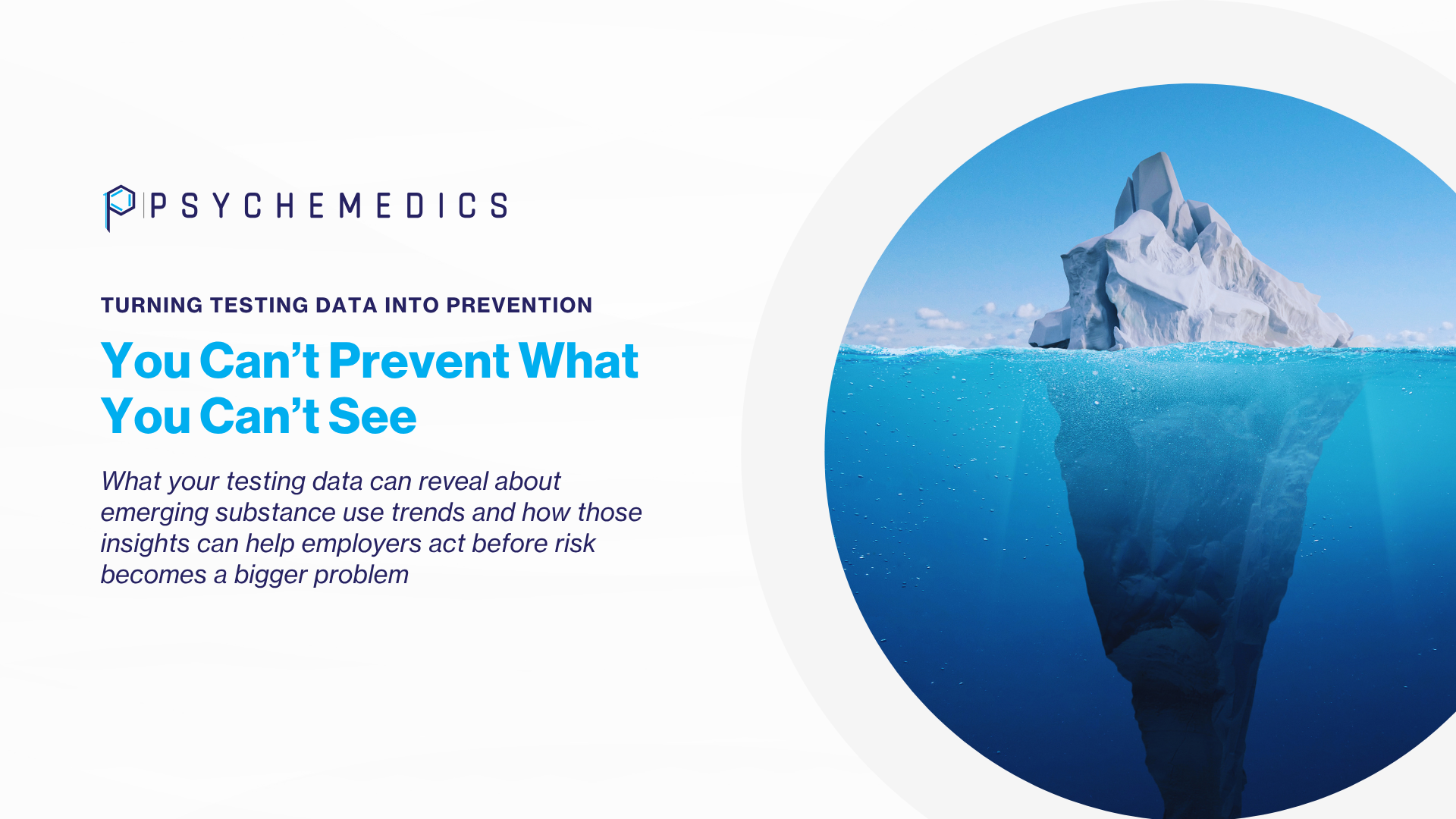
Prevention is much harder when you don’t have a clear picture of the problem you’re trying to prevent. You can’t build an effective prevention strategy around information you aren’t equipped to see.
Data Should Drive the Conversation
Testing data becomes much more valuable when organizations use it to ask better questions.
A positive rate alone doesn’t explain why a trend is occurring, but it can tell leadership something deserves a closer look. For example, an organization might begin to notice:
- An increase in positivity within a particular workforce population
- Changes in the substances being detected
- Differences in trends between locations or business units
- A sustained change in positivity over multiple testing periods
- Patterns that may warrant additional education or prevention efforts
- Gaps between the risks leadership believes it is managing and what the data is actually showing
Those observations don’t automatically provide the solution, but they create an opportunity to investigate, which is an important distinction. The purpose of workforce testing data shouldn’t be to create fear around a number; it should be to create visibility into where organizations may need to pay closer attention.
Prevention Is More Than Responding to a Positive
A reactive approach waits for a problem to become visible before addressing it, while a prevention-focused approach looks for opportunities to intervene earlier.
That doesn’t mean assuming every positive result represents an impending workplace incident. It means recognizing that patterns in workforce data can provide valuable signals when they are evaluated over time and in context.
For example, if an organization sees a sustained increase in positivity within a particular segment of its workforce, leadership may have an opportunity to ask what is driving that trend and whether additional prevention efforts could make a difference.
That could include:
- Expanding employee education
- Strengthening supervisor training
- Reviewing existing drug and alcohol policies
- Increasing awareness of available resources
- Evaluating whether testing frequency or methodology aligns with organizational risk
- Using workforce data to identify areas where additional attention may be warranted
The goal is not simply to catch employees using drugs but to create a safer environment by understanding where risk exists and giving organizations the information they need to address it.
Science Builds Confidence in the Data
If organizations are going to use testing data as part of a prevention strategy, they need to trust what that data represents, which is where the science behind the testing methodology comes into play.
Every testing method has its own strengths, limitations, detection window, and scientific considerations. Understanding those differences allows organizations to evaluate their results appropriately instead of treating every positive or negative result as an identical measure of risk.
At Psychemedics, our approach is grounded in decades of peer-reviewed scientific research and a commitment to developing testing methodologies that provide meaningful, reliable information. Our proprietary wash process, for example, was designed to address external contamination, and the methodology has been independently validated, including validation by the FBI. But the larger point extends beyond any one testing methodology.
Good prevention depends on good information, and good information depends on having confidence in the science behind the data.
The Opportunity Is in What Comes Next
A testing result should not end the conversation; it should start it. When organizations consistently evaluate their testing data, they can understand changing patterns, identify areas of concern, and determine where prevention efforts may have the greatest impact.
That is a different way of thinking about drug testing.
Instead of asking only:
“Did we identify drug use?”
Leaders can begin asking:
“What is this data telling us about our workforce?”
“Are we seeing a pattern that requires attention?”
“Are our current prevention efforts addressing the risks we’re actually seeing?”
“What can we do now that could prevent a larger problem later?”
Those questions turn testing from a compliance exercise into a strategic component of workplace safety.
Moving From Detection to Prevention
No single test or data point can predict what will happen in a workforce.Still, organizations can make better decisions when they have reliable information, understand what that information represents, and use it to look beyond the immediate result. That is ultimately where methodology represents a deeper meaning.
The science behind a test determines what the organization can see, and the data shows what may be changing. With those two components, leadership can decide what to do with that information.
The most effective testing strategy isn’t simply the one that detects drug use; it’s the one that helps an organization understand risk well enough to act on it.
References:
- MARÍA ELENA MEDINA-MORA. “Prevention of Substance Abuse: A Brief Overview.” World Psychiatry, vol. 4, no. 1, Feb. 2005, p. 25, https://pmc.ncbi.nlm.nih.gov/articles/PMC1414714/.
- Botvin, Gilbert J. “Substance Abuse Prevention: Theory, Practice, and Effectiveness.” Crime and Justice, vol. 13, Jan. 1990, pp. 461–519, https://doi.org/10.1086/449180.
- Hraber, Rebekah Falkner Katie Greene, Maddy. “State Strategies for Preventing Substance Use and Overdose Among Youth and Adolescents.” Nashp, 17 June 2024, https://nashp.org/state-strategies-for-preventing-substance-use-and-overdose-among-youth-and-adolescents/.